
Discover how sediment, mineral deposits, and iron ochre accumulate in sub-floor perimeter drains, and learn the step-by-step process for safely inspecting, cleaning, and flushing your basement waterproofing system.
The Vital Role of Interior French Drains in Basement Water Management
For homeowners across Pennsylvania, New York, and Ohio, an interior perimeter French drain system is the primary defense against basement flooding. Working in tandem with a heavy-duty sump pump, these sub-floor drainage channels intercept groundwater driven by hydrostatic pressure before it reaches the surface of your basement floor. However, because these pipes are embedded beneath concrete slabs in a damp, active subterranean environment, they require periodic maintenance to ensure peak operational performance.
How Sediment, Silt, and Mineral Deposits Accumulate Over Time
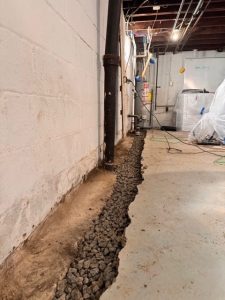
As water percolates downward through surrounding soils and gravel beds toward your foundation footings, it carries microscopic mineral particles, fine silt, and soil sediment. Over years of heavy rainfall and seasonal snowmelts, these particles enter the perforated PVC piping of your interior drain system. While flowing water naturally flushes most debris toward the sump pit, heavy silt, calcium scaling, and mineral sediment can gradually settle inside the pipe channels.
The Menace of Iron Ochre (Bacterial Slime) in Regional Soils
In many regional soils across the Mid-Atlantic and Great Lakes states, groundwater contains dissolved iron. When this iron comes into contact with air inside a drainage pipe, naturally occurring iron-related bacteria oxidize the iron, creating a thick, reddish-brown, sludge-like substance known as iron ochre. If left unchecked, iron ochre buildup can severely restrict water flow inside French drain pipes and clog sump pump intake valves.
Warning Signs Your Interior French Drain Is Slowing Down
Recognizing the early indicators of a partial drainage clog prevents unexpected basement water pooling during severe regional storms. Watch for these warning symptoms:
- Slow Inflow into the Sump Basin: During heavy rainstorms, water enters the basement floor perimeter but trickles into the sump pit much slower than it used to.
- Localized Seepage Along Wall-Floor Joints: Water beginning to pool in specific corners or sections of the basement floor where drainage flow appears restricted.
- Thick Reddish Slime in the Sump Pit: Observing heavy reddish-brown deposits or sticky sludge coating the walls of your sump basin and pump intake screen.
- Returning Musty Odors: A sudden spike in basement humidity or earthy, damp odors indicating trapped standing water inside blocked sub-floor pipes.
Step-by-Step Homeowner Guide to Flushing and Maintaining Your System
While major clogs require professional high-pressure hydro-jetting, homeowners can perform routine preventative flushing and visual inspections to keep drainage channels clear.
Step 1: Inspect the Sump Basin and Clean-Out Ports

Begin by removing the sump basin lid. Inspect the pump intake screen, check switch movement, and locate any system clean-out ports or inspection access points designed into your perimeter drainage layout.
Step 2: Flush Channels Using Clean Water
Using a standard garden hose connected to a clean water source, feed the hose gently into designated clean-out access points or perimeter channel entry points. Run a steady, moderate stream of water through the system. Observe the sump pit to ensure water flows freely and discharges rapidly through the sump pump discharge line.
Step 3: Clear Debris and Test Sump Operation
Scoop out any loose silt, gravel, or mineral flakes that flush into the sump basin to prevent them from jamming your primary pump impeller. Run a manual test cycle to confirm the pump discharges water safely outside the home.
When to Call Professional Waterproofing Experts
If routine flushing does not restore normal water flow, or if your drainage system is heavily impacted by hardened mineral scaling or dense iron ochre bacteria, DIY methods will not suffice. Professional waterproofing contractors utilize specialized commercial equipment—such as high-pressure rotary hydro-jetters and industrial drain cameras—to scour sub-floor PVC pipes clean without damaging the underlying gravel bed or concrete structure.
Frequently Asked Questions (FAQ)
Q: What is the red slime in my basement sump pump pit and drain pipe?
A: That red slime is iron ochre, a naturally occurring soil bacterium that oxidizes iron in groundwater, creating thick, gelatinous deposits that can clog drainage systems if left unmaintained.
Q: How often should an interior basement drainage system be flushed or inspected?
A: We recommend inspecting your sump pit annually and flushing sub-floor channels through clean-out ports every 2 to 3 years to prevent sediment and bacterial buildup.
Q: Can a clogged interior French drain cause water to flood through floor cracks?
A: Yes. When sub-floor drainage channels become obstructed, trapped hydrostatic pressure forces groundwater to back up and find alternative exit points through floor cracks and cove joints.
Need Professional Drainage Maintenance or Repairs?
Keep your basement dry and your drainage system flowing smoothly year-round. Contact Highlander Waterproofing today to schedule a professional system inspection or cleaning with our regional experts!

